

An under-desk treadmill works if you want to convert some seated work hours into light walking, but it won’t replace a moderate-intensity workout. In a 3-month randomized trial, users added about 1,622 steps daily and cut 3.6 sedentary minutes per work hour. You’ll pay a fine-motor cost, though: typing slows, while attention and memory hold steady. Your results hinge on task mix, schedule structure, and realistic goals, which the sections below break down in detail.
Key Takeaways
- Under-desk treadmills work modestly, converting some seated work time into light walking rather than delivering exercise-level fitness benefits.
- A 3-month randomized trial found about 1,622 extra daily steps and roughly 3.6 fewer sedentary minutes per work hour.
- Walking slows typing speed, with one study recording 13 fewer words per minute, while attention and memory remain relatively steady.
- A 13-month trial found no significant changes in sitting time or body composition, so weight loss shouldn’t be expected.
- They suit email and reading better than intensive typing, and they show no significant advantage over sit, stand desks.
What is an under-desk treadmill
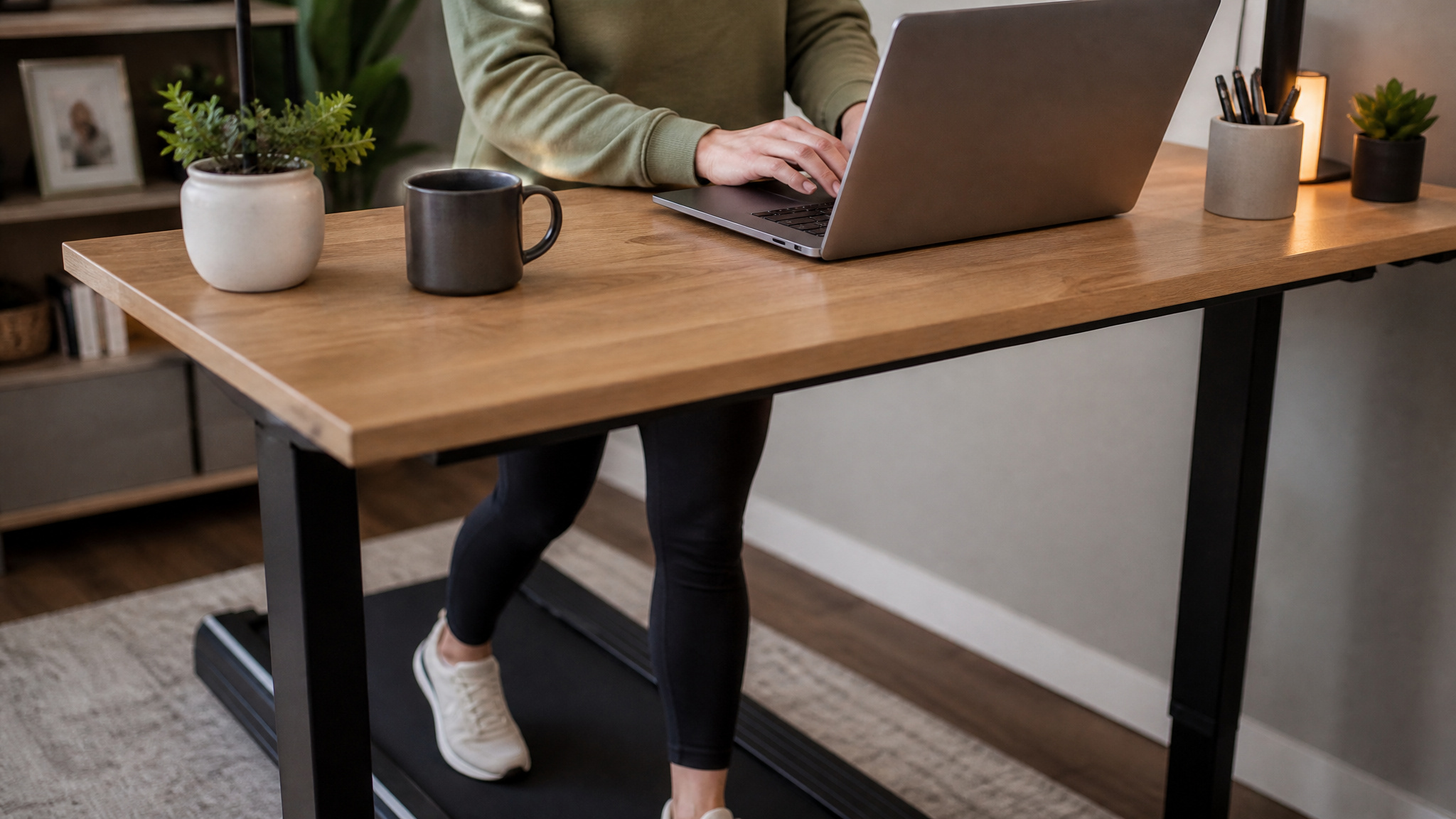
An under-desk treadmill is a compact treadmill that fits beneath a standing or sit, stand desk and lets you walk slowly while you type, read, or answer email. It differs from the one at your gym in purpose and intensity. Your gym’s treadmill supports running, inclines, and structured workouts.
Research protocols often use speeds near 1.5 mph, producing light-intensity activity rather than moderate or vigorous exercise. That’s the design intent: you replace some seated work with low-intensity movement, not run a stand-alone fitness program.
Whether it works depends on use. Owning one doesn’t guarantee less sitting, because walking time must actually displace chair time. Task fit matters too. Slow walking suits email better than intensive typing or fine-motor work, where typing speed and processing speed can drop.
How walking while working affects productivity
Walking while working mainly costs you fine-motor output, not overall thinking. Typing slows, but attention and memory hold up better than you might expect.
Treadmill desks slow your typing, not your thinking. Attention and memory stay surprisingly steady while you walk.
- Typing speed drops. A meta-analysis of 18 studies found reduced typing speed. One 45-minute study at 1.5 mph recorded 13 fewer words per minute.
- Attention is mostly unaffected. The meta-analysis found no effect on selective-attention tests.
- Executive control holds steady. A 69-person randomized study found no significant difference in executive-control or response-inhibition tasks during slow walking.
- Learning retention stays similar. Retention matched seated performance, though processing speed and working memory slowed.
Match the task to the treadmill. Walk during email or calls, and sit for intensive typing or precision work.
What the research says about active workstations
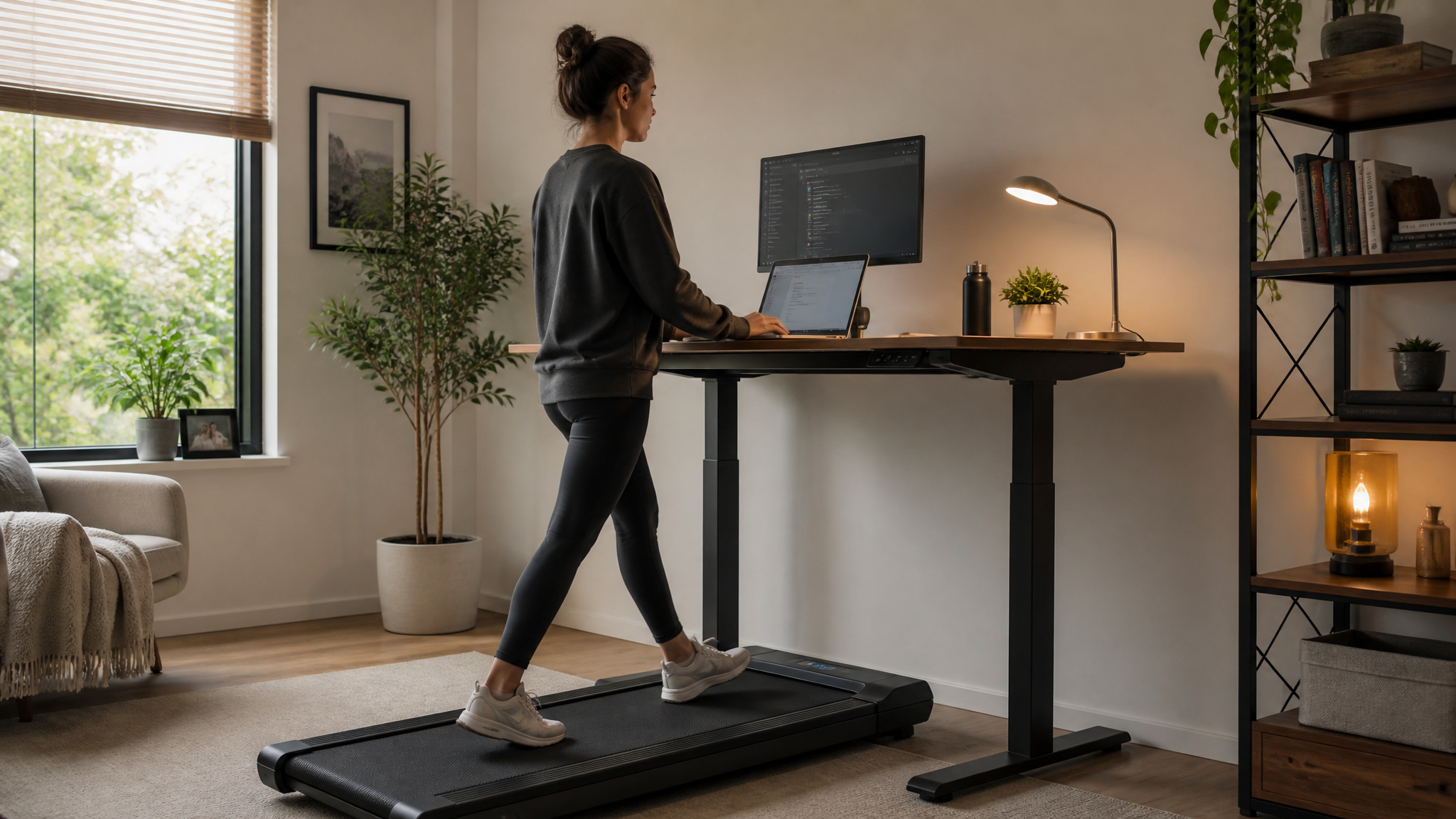
Research shows that active workstations raise energy expenditure compared with sitting, but it doesn’t support treating them as exercise equipment. In a 3-month randomized trial, you’d expect roughly 1,622 extra steps per day, 1.6 more minutes of light activity per work hour, and 3.6 fewer sedentary minutes per work hour. Reviews report similar gains, sometimes exceeding 2,000 steps daily, but almost entirely at light intensity. Trials haven’t found significant increases in moderate- or vigorous-intensity activity.
Longer evidence is weaker. A 13-month trial comparing treadmill desks with sit, stand desks found no significant change in daily sitting time, body measurements, or body composition. Only eight of 26 workplace studies in a 2022 review were randomized. You should view these desks as a way to replace some sitting, not as a dependable weight-loss tool.
What the realistic benefits and drawbacks are
The realistic benefit of an under-desk treadmill, used consistently, is converting some seated work time into light walking, which raises energy expenditure without requiring separate exercise time. The drawbacks are low intensity, an uncertain health payoff, and task trade-offs. Weigh that gain against these documented limits:
- More steps: One 3-month trial found users averaged 1,622 extra daily steps and 3.6 fewer sedentary minutes per work hour.
- Low intensity: Trials haven’t shown significant increases in moderate- or vigorous-intensity activity, so the treadmill doesn’t replace exercise.
- Uncertain health payoff: A 13-month trial found no significant changes in sitting time, body composition, or other health outcomes.
- Task trade-offs: A meta-analysis found reduced typing speed, so you’ll likely do better walking during email than during intensive typing or fine-motor work.
The benefit depends on actual use, not ownership.
How under-desk treadmills compare to standing desks and walking pads
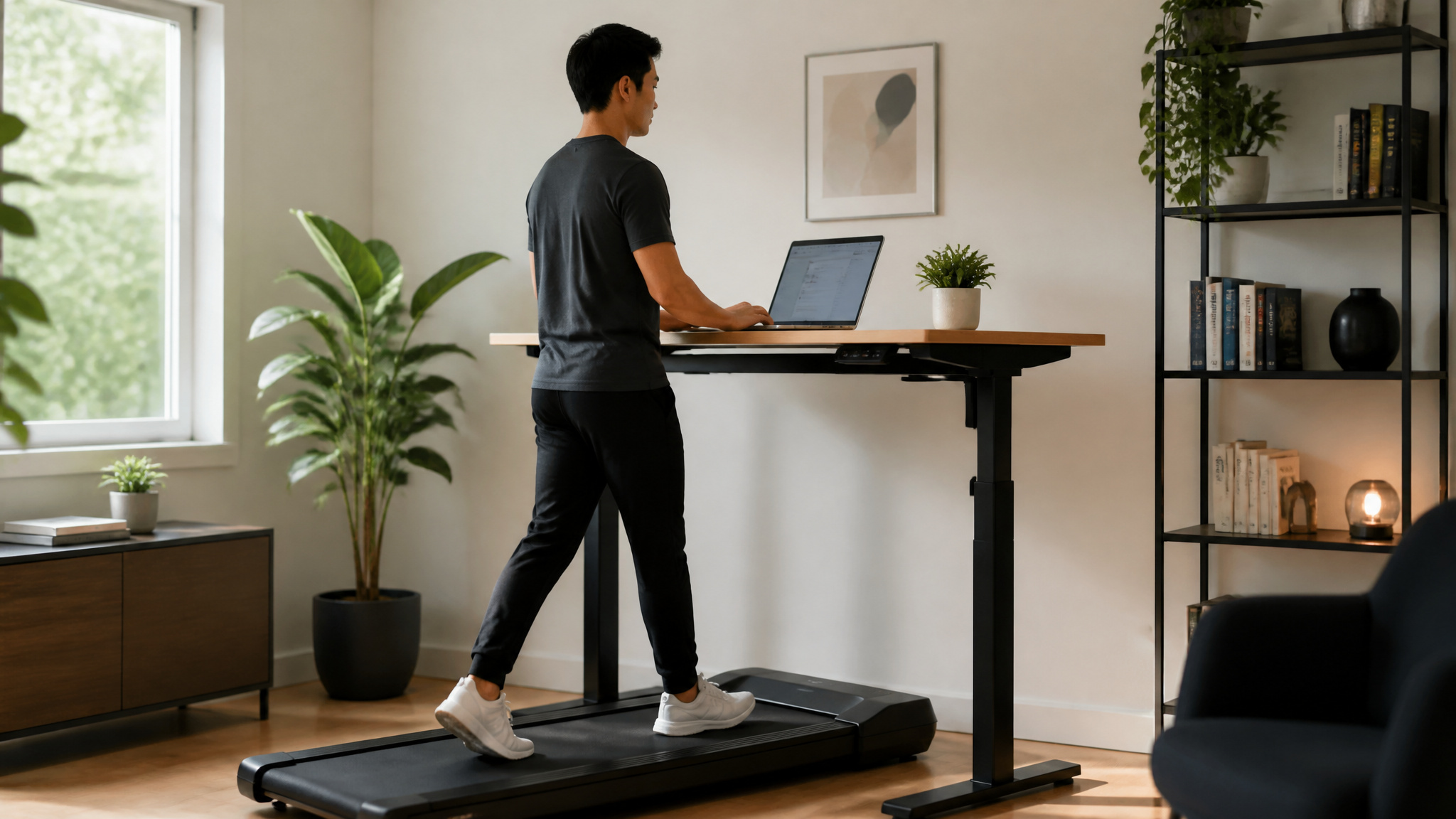
Under-desk treadmills increase daily walking compared to standing desks but don’t reliably reduce sitting time or improve health outcomes. In one trial, treadmill-desk users walked about 22 more minutes daily than sit, stand-desk users. Yet a 13-month trial found no significant differences in sitting time or health outcomes versus sit, stand desks.
| Factor | Treadmill desk | Sit, stand desk |
|---|---|---|
| Daily walking | Higher (+22 min in one trial) | Minimal |
| Sitting time (13 months) | No significant reduction | Comparator baseline |
| Typing speed | Reduced | Not reported |
| Health outcomes | No significant change | No significant difference |
Walking pads are compact treadmills you slide under a standing desk. Research doesn’t isolate them, so apply treadmill-desk findings cautiously. Your choice should hinge on task type: walk during email, stand or sit for intensive typing. Equipment alone won’t reduce sitting. Your actual use determines results.
What to look for before buying one
Look for evidence that a treadmill desk will replace your seated work time, since research ties results to actual use rather than ownership. Assess four factors:
- Your task mix. Slow walking reduced typing speed in a meta-analysis of 18 studies, so it fits email and other low-dexterity work better than intensive typing.
- A realistic schedule. A 3-month trial produced gains with structured sessions of up to 45 minutes twice daily.
- Your comparator. If you already own a sit, stand desk, a 13-month trial found no significant sitting-time or health advantage.
- Your goal. Expect added light walking, not weight loss or moderate-to-vigorous fitness gains.
Equipment alone won’t cut your sitting. You’ll see benefits only when walking displaces chair time during your workday.
How Steppa counts your under-desk steps toward real prizes
Steppa counts the steps you log while walking at your desk and converts them into progress toward real prizes, giving you a concrete reason to step on the belt each workday. Research ties treadmill-desk results to the steps you actually take rather than the equipment you own, so a rewards app like Steppa targets the variable that matters most: consistent use. In a 13-month trial, workers told to walk at least an hour daily showed no significant change in sitting time, which suggests availability alone doesn’t drive behavior. Keep expectations evidence-based: those steps are mostly light-intensity, so they won’t replace structured exercise or guarantee weight loss. What rewards can do is reinforce the habit that produced 1,622 extra daily steps in a 3-month trial.
Conclusion
So, do under-desk treadmills actually work? Yes, within realistic limits. They’re a genuinely useful way to turn some of your seated work hours into light movement, adding around 1,622 extra steps a day and trimming sedentary minutes in the trials, but they’re not a substitute for a real workout and shouldn’t be counted on for weight loss. The trade-off is mostly fine-motor: your typing slows while your attention, memory, and focus hold up well, which is exactly why they shine during email, reading, and listening-heavy calls and less so during intensive typing. The single biggest factor in whether one pays off is use, not ownership, since the benefits only appear when walking actually displaces chair time. If you’ll build it into a structured routine and match it to the right tasks, an under-desk treadmill is a smart, low-effort way to sit less and move more through your workday, just pair it with real exercise for fitness and keep your expectations grounded in what the evidence shows.
Walk Anywhere and Qualify for Payouts
Walking pads, treadmills, or sidewalks all count the same when steps are tracked through Apple Health. Play Steppa connects your daily step goals to shared prize pools, with no penalties if you miss a day. Download on the App Store today.
Frequently Asked Questions
How Fast Should I Walk on an Under-Desk Treadmill While Working?
Walk at a slow, self-selected pace, roughly 1.5 mph or less, and adjust it to your task. In a 45-minute study, 1.5 mph slowed processing speed, attention, and working memory, and cut typing by 13 words per minute, though learning retention held steady. You’ll handle email or low-dexterity work fine while walking, but you should slow down or stop for intensive typing or fine-motor tasks. Expect light activity, not exercise.
How Many Minutes per Day Should Beginners Walk at Their Desk?
Start with short sessions and build toward 60, 90 minutes daily, since that’s the range trials used. A 3-month study had workers walk up to 45 minutes twice daily, raising steps and light activity. A 13-month trial asked for at least one hour daily but found no sitting-time change. So don’t just log minutes; you’ll benefit only if walking replaces seated time. Pair walking with email or low-dexterity work, not intensive typing.
What Shoes Are Best for Walking on an Under-Desk Treadmill?
Practically, you’ll do well with a cushioned, flexible walking or running shoe that fits securely. Avoid heels, slippers, or going barefoot. Since you’re mainly doing slow, light-intensity walking, sometimes up to 90 minutes daily, comfort and stability matter more than performance features. If you notice foot pain, shorten sessions and reassess your shoes.
Can I Use an Under-Desk Treadmill During Video Calls Without Distracting Others?
You probably can, especially on listening-heavy calls. Task demands matter most: in one 45-minute study, walking at 1.5 mph slowed processing speed, attention, and working memory, while another trial found no executive-control decline during slow walking. So you’ll likely do best walking slowly during calls where you’re mostly listening and pausing the belt when you need sharp focus or fast typing.
Is Walking at a Desk Safe for People With Joint or Balance Problems?
If you have joint or balance problems, check with a clinician before you start. The trials enrolled overweight or obese office workers and healthy adults, so their findings don’t directly address your risks. They do show that walking at 1.5 mph slows your typing, processing speed, and attention. Before you begin, ask your clinician or physical therapist whether slow, light, self-paced walking suits your specific condition and mobility.