

You walk more in a step challenge with friends because social accountability turns a private goal into a public commitment. When friends can see your step count, missed days become harder to ignore. Research shows follow-through jumps from about 65% to 95% with ongoing check-ins, and team-challenge participants average 1,922 more steps per day than solo trackers. Leaderboards add healthy competition that keeps you consistent. Keep going to learn how to start your own.
Key Takeaways
- Social accountability lifts exercise follow-through from about 65% to 95% through ongoing check-ins with friends.
- Team-challenge participants average 1,922 more steps per day than solo trackers.
- Shared visibility and leaderboards make missed or slow days harder to ignore.
- Head-to-head comparison gives daily step counts greater behavioral weight, sparking healthy competition.
- Small private groups of 5 to 10 sharpen motivation compared with tracking alone.
Why does a step challenge with friends make you walk more

A step challenge with friends makes you walk more because accountability changes your behavior. When you make a commitment to another person, your follow-through jumps from 65% to 95% with ongoing check-ins. A step challenge with friends adds visibility, so missed days become harder to ignore. The numbers back this up: team-challenge participants average 1,922 more steps per day than people tracking alone. A group step challenge turns your step count into an immediate comparison through shared leaderboards, and that friendly competition sustains your effort. A walking challenge with friends also creates external pressure that supports consistency, since private groups make skipping participation harder to do silently. Add encouragement, quick reactions, and mutual check-ins, and you’re far less likely to drop out.
What the research says about social accountability and exercise
Social accountability raises exercise follow-through from about 65% when you commit alone to 95% once someone’s checking in on your progress. That jump explains why step challenges with friends work so well. Visibility makes missed days harder to ignore, and shared goals create external pressure that keeps you consistent.
The research backs this up. Team-challenge participants completed physical activity goals more often than solo participants, averaging 1,922 more steps per day. A walking challenge app with friends amplifies these effects by keeping progress visible through leaderboards and daily updates.
That’s the mechanism behind a Steppa step challenge: verified tracking, private groups, and mutual check-ins reduce your chance of dropping out. Small groups of 5 to 10 often drive stronger motivation than tracking alone.
How group challenges create healthy competition
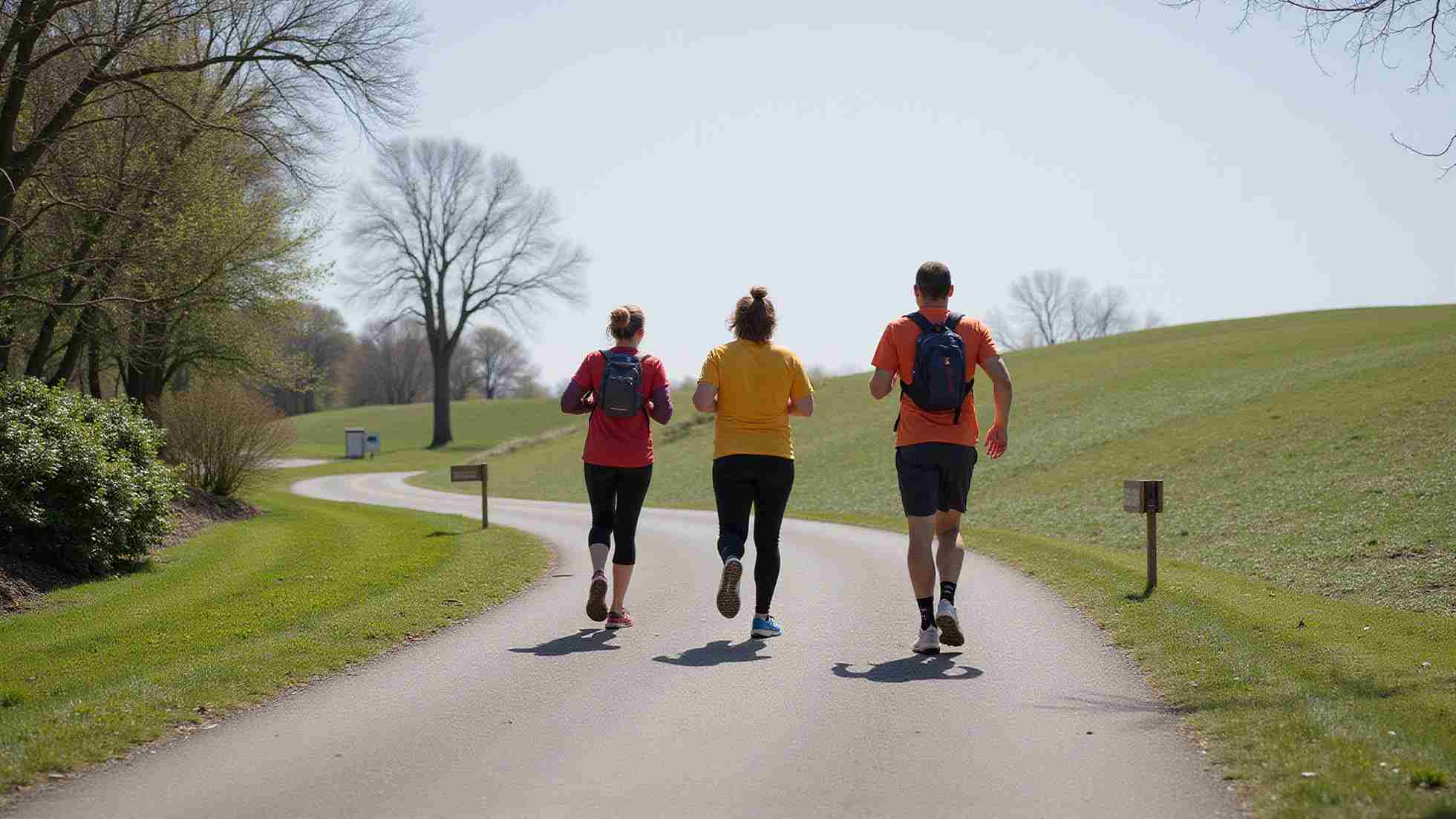
Group challenges create healthy competition by turning your step count into a number others can see, making competition concrete and driving behavior. The evidence backs this up: team-challenge participants averaged 1,922 more steps per day than those tracking alone, and they were more likely to complete the challenge overall. When you can compare your progress head-to-head, each day’s count carries weight it wouldn’t otherwise have. Leaderboards make that comparison immediate, so a slow day becomes visible, and harder to ignore. Small groups sharpen this effect, often generating stronger motivation than solo tracking. You’re not competing against strangers; you’re matching effort with people you know. That friendly pressure sustains short-term effort, and over a fixed timeframe of one to four weeks, it compounds into a genuine routine.
How friend challenges differ from solo tracking in results
Friend challenges produce higher completion rates and more daily steps than solo tracking, because they add accountability to a group instead of just yourself. When you join a team challenge, you’re far more likely to finish it, and the step data proves it. Team-challenge participants averaged 1,922 more steps per day than those tracking alone. The difference comes from external pressure: when others see your progress, missed days become harder to ignore.
| Solo Tracking | Friend Challenge |
|---|---|
| Accountable to yourself | Accountable to the group |
| Lower completion rates | Higher completion rates |
| No comparison | Leaderboard comparison |
You gain visibility, competition, and encouragement that solo tracking simply can’t replicate. That combination sustains effort, reduces dropout, and turns a private routine into a shared, motivating commitment.
Why seeing friends’ progress keeps you going

Seeing friends’ progress keeps you going because group visibility changes your behavior when you can see how everyone else is doing. It does more than track your numbers. When a friend’s steps climb on the leaderboard, you feel immediate pressure to close the gap. That head-to-head comparison sustains effort, and it shows in the data: team-challenge participants averaged 1,922 more steps per day than people tracking alone.
Seeing others’ progress reinforces your own participation. A missed day becomes harder to ignore when it’s visible to everyone in your private group. Mutual check-ins reduce your chance of dropping out, and quick reactions or comments function as rewards that keep you moving.
That constant visibility turns each step count into a signal, one that keeps you walking to avoid falling behind.
How to start a step challenge with friends
Start a step challenge with friends by starting small and structuring it deliberately. Research-backed guidance favors 5 to 10 participants, though friend-based challenges often work well with 3 to 8 people. Set a fixed timeframe, typically 1 to 4 weeks, so the challenge stays focused and momentum builds. Establish a daily step target to create repeated accountability loops, and use an app with verified step data from phone health systems to reduce reliance on self-reporting. Create a private group so everyone sees each other’s steps in real time, then share invite links to bring friends in. Add a shared leaderboard to keep progress visible across the full challenge. This structure combines accountability, friendly competition, and verified tracking, the elements most linked to consistent follow-through.
How Steppa makes challenging friends easy and rewarding
Steppa makes challenging friends easy and rewarding by rolling accountability, competition, and verified tracking into one simple setup. You invite friends through a link and form a private group of 5 to 10 people, the size research favors for stronger motivation. Everyone’s steps sync from your phone’s health system, so verified data replaces self-reporting and keeps the leaderboard honest.
You set a daily target and a fixed timeframe, usually 1 to 4 weeks, creating repeated accountability loops. Daily, weekly, and monthly leaderboards make progress easy to compare, turning step counts into immediate competition. Since team-challenge participants average 1,922 more steps than solo trackers, that head-to-head format matters.
Quick reactions, comments, and milestone celebrations function as rewards, reinforcing your streaks and reducing the chance you’ll quietly drop out.
Challenge Your Friends to Keep Moving
Walking is easier to stick with when your friends are doing it too. PlaySteppa lets you turn daily steps into friendly competition, giving you a simple way to track progress, challenge your circle, and stay accountable.
Download Steppa and start a step challenge with your friends.
Frequently Asked Questions
What Happens if a Friend Drops Out Mid-Challenge?
A friend dropping out can change the group dynamic, but it does not have to end the challenge. Keep the remaining participants engaged with regular check-ins, shared goals, and encouragement. If your group becomes too small, invite another friend or adjust the format. The goal is to maintain a social structure that keeps everyone motivated rather than relying on one participant to drive the group.
Can I Join Multiple Step Challenges at Once?
You can participate in multiple step challenges if the platform allows it, but managing several challenges may become distracting. Consider how much time and effort you want to put into each one. If multiple leaderboards make it harder to stay consistent, focus on the challenge that best matches your goals. A manageable challenge is more useful than joining several and losing interest.
Are Step Challenges Safe for People With Health Conditions?
Step challenges can be adapted for different activity levels, but people with health conditions should follow their healthcare provider’s recommendations before changing their activity level. Set goals based on your current abilities rather than competing against someone else’s step count. If you experience pain, dizziness, unusual shortness of breath, or another concerning symptom while exercising, stop and seek appropriate medical guidance.
How Accurate Are Phone-Based Step Counts?
Phone-based step counts can provide a useful estimate of daily activity, but they are not perfectly accurate. Results can vary based on where you carry your phone, walking speed, phone movement, and the device’s sensors and software. For a group challenge, having everyone use a consistent tracking method can make comparisons more consistent. Avoid treating small differences in step counts as exact measurements.
What Step Goal Should Beginners Aim for Daily?
There is no single daily step goal that is right for every beginner. Start with a number that is realistic for your current activity level and gradually increase it as your fitness improves. You do not need to immediately reach 10,000 steps to benefit from becoming more active. The most useful goal is one you can maintain consistently without causing excessive fatigue or discomfort.