

You’ll cover one mile in roughly 2,000 to 2,500 steps, depending on your step length. The math is simple: divide 5,280 feet by your average step length in feet. A 2.4-foot step yields about 2,200 steps per mile. Since walking step length runs near 41% of your height, taller walkers log fewer steps. Pace matters too, since brisk walking and running lengthen each step. Your height, pace, and measured stride reveal your exact personal number.
Key Takeaways
- One mile equals roughly 2,000, 2,500 steps for most adults, with about 2,100, 2,200 steps typical for average height.
- Steps per mile equals 5,280 feet divided by your step length in feet.
- Taller people take fewer steps per mile, from about 2,100 at 6 feet to 2,500, 2,600 at 5 feet.
- Pace changes step count: leisurely walks need 2,400, 2,600 steps, brisk walks 2,000, 2,300, and runs 1,500, 1,800.
- For personal accuracy, count steps over a known distance several times, then divide the average step count by miles walked.
How many steps is 1 mile
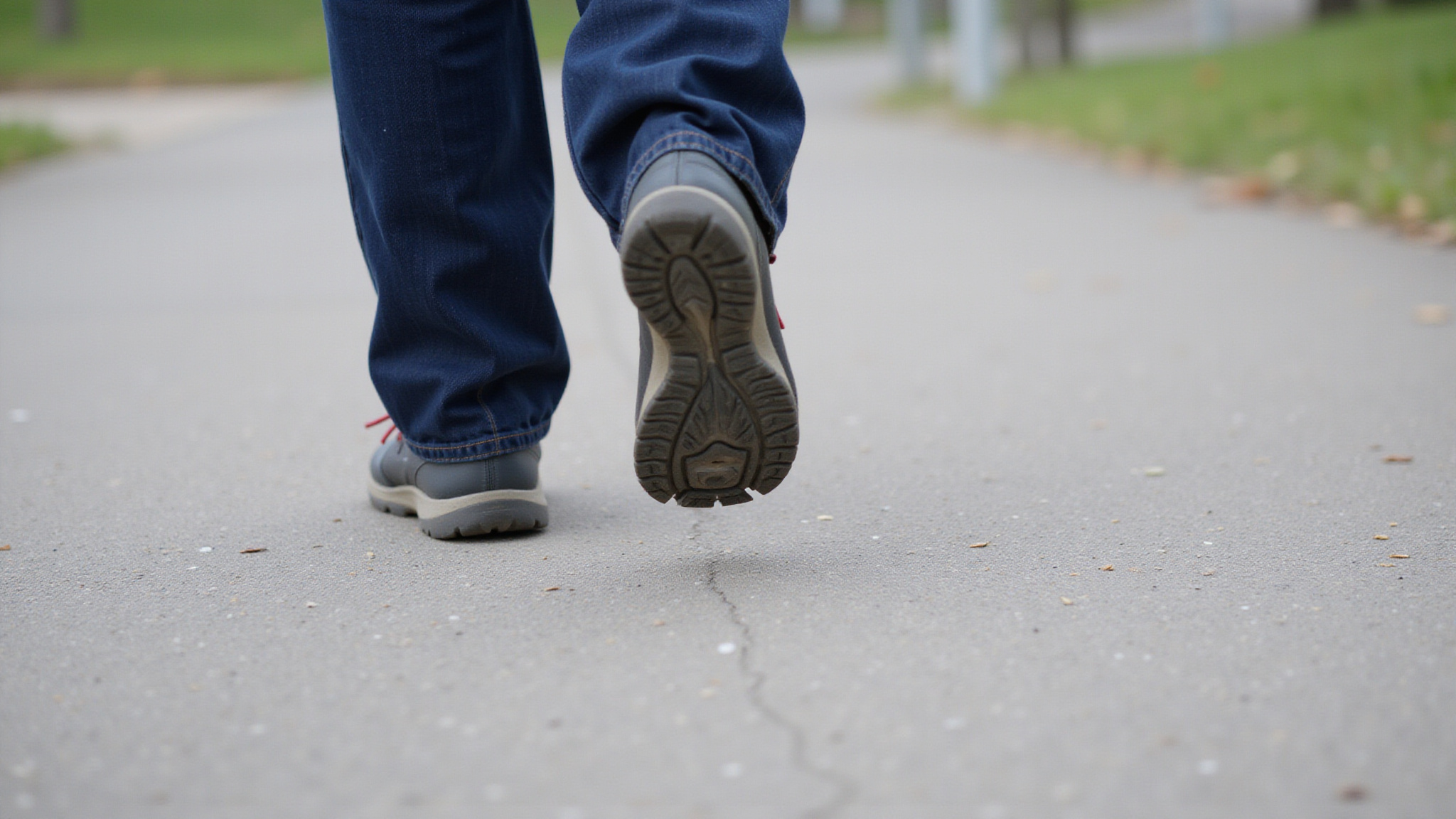
One mile is about 2,000, 2,500 steps for most adults, and a practical shorthand for an average-height adult at a moderate pace is roughly 2,100, 2,200 steps. The math is simple: a mile is 5,280 feet, so your steps per mile equal 5,280 divided by your step length in feet. At 2,200 steps, each step averages about 2.4 feet; at 2,000, it’s 2.64 feet; at 2,500, it’s 2.11 feet. Your height drives much of that variation, since walking step length runs about 41% of height. Pace matters too: a brisk walk lengthens your stride, while a leisurely one shortens it and adds steps. Treat these as estimates, not fixed conversions. Gait, terrain, and speed shift the count, so measuring your stride gives the best number.
Why stride length is the key variable
Stride length is the key variable because steps per mile equal 5,280 feet divided by the distance each step covers, so step length drives your count more than any other factor. If your average step spans 2.64 feet, you’ll log about 2,000 steps per mile; shorten it to 2.11 feet, and you’ll need roughly 2,500.
Your height sets the baseline. Researchers estimate walking step length at about 41% of height, so taller walkers cover more ground per footfall. At 6 feet, you’ll take around 2,100, 2,130 steps per mile; at 5 feet, closer to 2,500, 2,600.
Pace and terrain also change your step length, so generic formulas can’t capture your exact gait. Measuring your own step length gives you a far more reliable conversion than any population average.
How height affects your steps per mile

The taller you are, the fewer steps you take per mile, because longer legs act as longer levers and each footfall covers more ground. Researchers estimate your walking step length at about 41% of your height, which makes height the most practical predictor of stride. Commonly cited estimates show the pattern clearly:
Height is the most practical predictor of stride: your step length runs about 41% of your height, so taller walkers take fewer steps per mile.
- If you’re 5 feet tall, you’ll take roughly 2,500, 2,600 steps per mile.
- At 5 feet 4 inches, expect about 2,300, 2,400.
- At 5 feet 8 inches, you’ll average near 2,250.
- At 6 feet, you’ll need approximately 2,100, 2,130.
Height doesn’t fully determine your count. Leg proportions, hip mobility, and gait mechanics vary between people of identical height, so treat these figures as starting estimates, then measure your own stride for precision.
How steps per mile compare across heights and paces
Pace shifts your steps per mile just as much as height does, because both alter step length, which sets your total: steps per mile equal 5,280 feet divided by step length. Height alone spans a moderate range, from roughly 2,500, 2,600 steps at 5 feet to 2,100, 2,130 at 6 feet.
| Pace | Estimated steps per mile |
|---|---|
| Leisurely walk | 2,400, 2,600 |
| Brisk walk | 2,000, 2,300 |
| Run | 1,500, 1,800 |
When you speed up, you lengthen each step, so you cover a mile in fewer of them. Running cuts your count most because running steps are longer. Your cadence rises too, from about 100, 120 steps per minute walking to 150, 185 running. For precision, measure your own count over a known distance at each pace you regularly use.
How to measure your own stride length

To measure your own stride length, walk a known distance, such as a 400-meter track lap or a marked one-mile route, at your normal pace and count every step. Repeat the walk several times on the same surface and average the counts, since pace and terrain alter stride. Then divide steps counted by miles walked to get steps per mile, or divide 5,280 feet by your average step length in feet. For example, 2,200 steps per mile equals about 2.4 feet per step. Step length is the distance from one footfall to the next, and stride length usually spans two steps. Your measured value beats height formulas like 41% of height, which can’t fully capture your individual gait.
Why knowing your steps per mile makes every goal easier
Your personal steps-per-mile figure lets you convert any distance target into a step count, or any step count into distance, without guessing. That precision matters because generic tracker settings assume an average stride, while your height, pace, and terrain shift the real count.
- Distance goals: At 2,200 steps per mile, you’ll need about 4,400 steps to cover two miles.
- Step targets: You’ll see that 10,000 steps equal roughly 4.5 miles.
- Pace adjustments: Brisk walking lengthens your step, cutting counts to about 2,000, 2,300 per mile.
- Tracker calibration: Entering your measured stride replaces population averages, so your device’s distance readout reflects your actual gait.
Recheck your figure whenever your pace or surface changes, since stride length shifts and alters every later conversion.
How Steppa tracks your steps and turns every mile into progress
Steppa counts each footfall and turns it into miles by multiplying steps by step length, then scaling the result against the 5,280 feet in a mile, the same arithmetic you’d use by hand.
A generic stride setting yields only an estimate, so you’ll get tighter conversions by entering a measured step length. Walk a marked track lap, count your steps, repeat, and average the results. If your step averages 2.4 feet, Steppa logs roughly 2,200 steps per mile, so 10,000 steps register as about 4.5 miles.
Pace changes stride length, so keep your speed and surface consistent when calibrating. A brisk walk runs 2,000, 2,300 steps per mile, while a leisurely one climbs toward 2,600. Recalibrate whenever your routine shifts, and every logged mile reflects your gait.
Conclusion
At its simplest, one mile is about 2,000 to 2,500 steps, with roughly 2,100, 2,200 a handy rule of thumb for an average-height adult at a moderate pace. But the real takeaway is the formula behind it: steps per mile equal 5,280 feet divided by your step length, which means your height, pace, and terrain all nudge the number. Taller walkers cover a mile in fewer steps, brisk walking and running stretch each stride, and inclines or loads shorten it. That’s why a measured stride always beats a generic estimate, so spend a few minutes walking a known distance, counting your steps, and averaging a couple of passes to find your personal number. Enter that value into your tracker and every distance goal, step target, and mile logged suddenly reflects your actual gait instead of a population average. Know your steps-per-mile, and you turn a fuzzy guess into a precise, motivating tool for every walk you take.
Count Your Steps, Share the Prize Pool
Knowing your step counts is useful, but hitting them inside a paid challenge is more rewarding. Play Steppa uses Apple Health to verify every step and pays winners through secure Stripe payouts when challenges end. Download on the App Store today.
Frequently Asked Questions
Do Steps on a Treadmill Count the Same as Steps Outdoors?
Yes, each footfall counts as one step, but your steps per mile may not match. Surface, pace, and terrain alter your step length, and shorter steps mean more steps per mile. Generic estimates of 2,000, 2,500 steps per mile won’t capture your gait on either surface. To compare accurately, you’ll count steps over a measured distance on each, repeat the walk, then divide steps by miles at a matching walking pace.
How Many Steps per Mile Does Walking Uphill or on Trails Take?
There’s no fixed uphill or trail figure, but you’ll typically exceed your flat-ground 2,000, 2,500 steps per mile. Inclines and uneven terrain shorten your step length, and since steps per mile equals 5,280 feet divided by step length, shorter steps raise your count. To get your own number, walk a measured trail segment, count steps, divide by miles walked, and repeat at a consistent pace and terrain to average your results.
Does Carrying a Backpack or Stroller Change My Steps per Mile?
Yes, it can, though you won’t find a fixed conversion for loads. A backpack or stroller can change your gait, and if it slows your pace or shortens your step length, you’ll need more steps per mile. Remember: 5,280 feet ÷ step length sets your count, so shrinking a 2.4-foot step raises it above 2,200. To quantify your effect, walk a measured mile loaded and unloaded, then compare both counts.
Are Phone Step Counts as Accurate as a Wrist-Worn Fitness Tracker?
Neither device is guaranteed to be more accurate, and both convert steps to distance using stride estimates, so generic stride settings introduce error. You’ll improve either device by counting steps over a measured mile, repeating the walk, and averaging. Then divide 5,280 feet by your step length and enter that personal value in its settings.
How Many Calories Does Walking One Mile Typically Burn?
You’ll typically burn about 80, 100 calories walking one mile if you weigh around 150 pounds, though this figure comes from general exercise research rather than step-count data. Body mass drives energy cost most: you’ll expend roughly 0.55, 0.65 calories per pound per mile. Your pace, incline, and terrain shift it further. Since you cover a mile in about 2,000, 2,500 steps, each step costs you roughly 0.04 calories at that typical body weight.