

Incline walking means walking uphill, usually on a treadmill set between 3% and 15% grade. You’ll raise metabolic cost about 52% at 5% and 113% at 10% versus level walking, working your glutes, calves, and thighs harder without a running flight phase. Start conversationally at 3, 5% and 2.5, 3.0 mph for 20, 25 minutes, three times weekly. Add about 1 percentage point per week toward 6%. Next, you’ll find goal-specific grades, interval templates, and calf-safe progression rules.
Key Takeaways
- Incline walking means walking uphill, usually on a treadmill set between 3% and 15% grade, raising effort without increasing speed.
- Compared with level walking, metabolic cost rises about 52% at 5% grade and 113% at 10% grade, boosting calorie burn.
- It works the glutes, calves, and thighs and raises aerobic demand while keeping a walking gait with no running flight phase.
- Beginners should start at 3, 5% grade and 2.5, 3.0 mph for 20, 25 minutes, three times weekly, adding about 1% weekly toward 6%.
- Progress safely by changing incline or duration one at a time, and stop for pain, dizziness, or unusual breathlessness.
What is incline walking
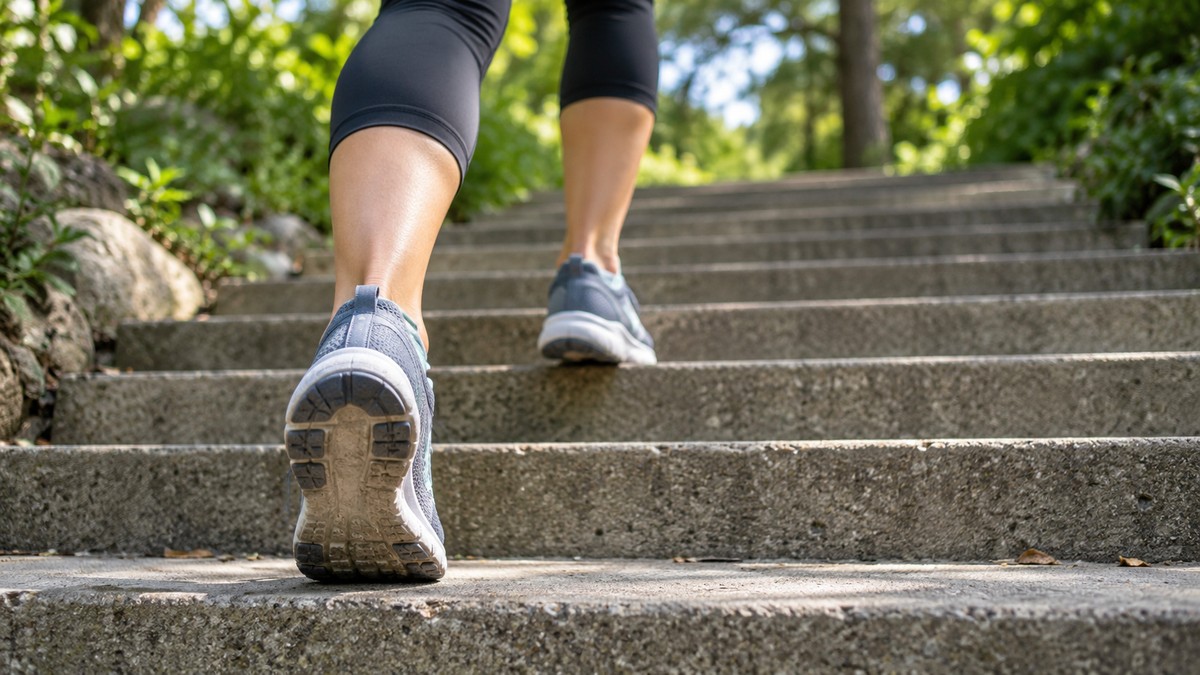
Incline walking is walking on an uphill grade, typically on a treadmill set between roughly 3% and 15%, or on sloped terrain outdoors. Each percentage point represents vertical rise per 100 units of horizontal distance, so a 10% grade lifts you 10 feet for every 100 feet traveled.
Raising the grade increases metabolic cost without forcing you to walk faster: one biomechanics study reported increases of 52% at 5% and 113% at 10% versus level walking. You’ll also load your calves, glutes, and thighs more heavily while keeping a walking gait instead of running’s repeated flight phase. That doesn’t make it impact-free; steep grades can strain your calves and Achilles tendons. You control intensity through three variables: speed, grade, and duration, each adjustable independently.
What the specific fitness benefits are (glutes, cardio, calorie burn)
Incline walking burns more calories, raises aerobic demand, and works your glutes, calves, and thighs harder than level walking.
Energy expenditure is the most measurable payoff. Versus level walking, metabolic cost rises about 52% at a 5% grade and 113% at 10%, so you burn more without walking faster. Treat treadmill calorie readouts as estimates, since body size, speed, grade, and duration all shift the total. Incline walking can support weight management, but it won’t guarantee fat loss.
Raising the grade also increases aerobic demand, making a familiar pace harder. You can adjust intensity through speed, incline, or duration. In one small study, 12-3-30 burned about 10 kcal/min versus 13 kcal/min running, with fat supplying more of the energy (41% versus 33%).
Climbing increases demand on your glutes, calves, and thighs. You keep a walking gait without running’s flight phase, but steep grades can strain your calves and Achilles tendons.
How to set up an incline walking routine
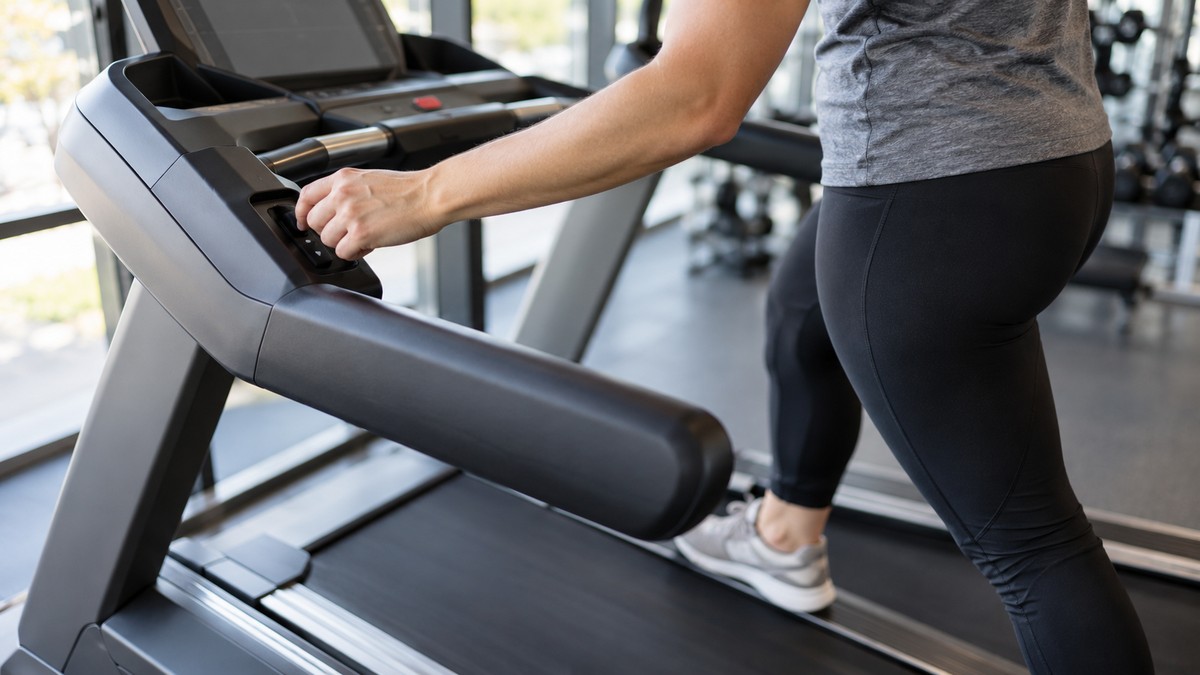
Set up an incline walking routine by starting at a 3, 5% grade and a comfortable speed of roughly 2.5, 3.0 mph. Walk 20, 25 minutes, three times weekly, at a conversational pace. If sessions feel comfortable, raise the incline about 1 percentage point per week toward 6%, but don’t increase incline and duration sharply at once.
Progress to 30-minute sessions four times weekly, alternating steady 6, 8% walks with intervals: 2 minutes at 10% incline, then 2 minutes at 4%. Warm up 5 minutes at an easy pace and low grade, and cool down for 5 minutes at a lower grade. Save the 12-3-30 format (12% incline, 3 mph, 30 minutes) for later, since it’s demanding. Reduce speed or grade if your form deteriorates.
How incline walking compares to flat walking and running
Incline walking costs more energy per step than flat walking and less per minute than running, while keeping a lower-impact walking gait. One biomechanics study reported metabolic cost increases of 52% at a 5% grade and 113% at 10% compared with level walking, so you can work harder without walking faster.
| Comparison | Key finding | What it means for you |
|---|---|---|
| Flat walking | Baseline metabolic cost | Use it for easy recovery days |
| 5, 10% incline | Cost rises 52, 113% | Add grade before adding speed |
| 12-3-30 vs. running | ~10 vs. ~13 kcal/min | Extend duration to match total output |
| Fuel use | Fat ~41% vs. ~33% | Don’t expect guaranteed fat loss |
Unlike running, incline walking keeps a walking gait without the repeated flight phase. It isn’t impact-free, though. Steep grades load your calves and Achilles tendons, so progress gradually and let comfort guide each increase.
What the right incline percentage is for different goals
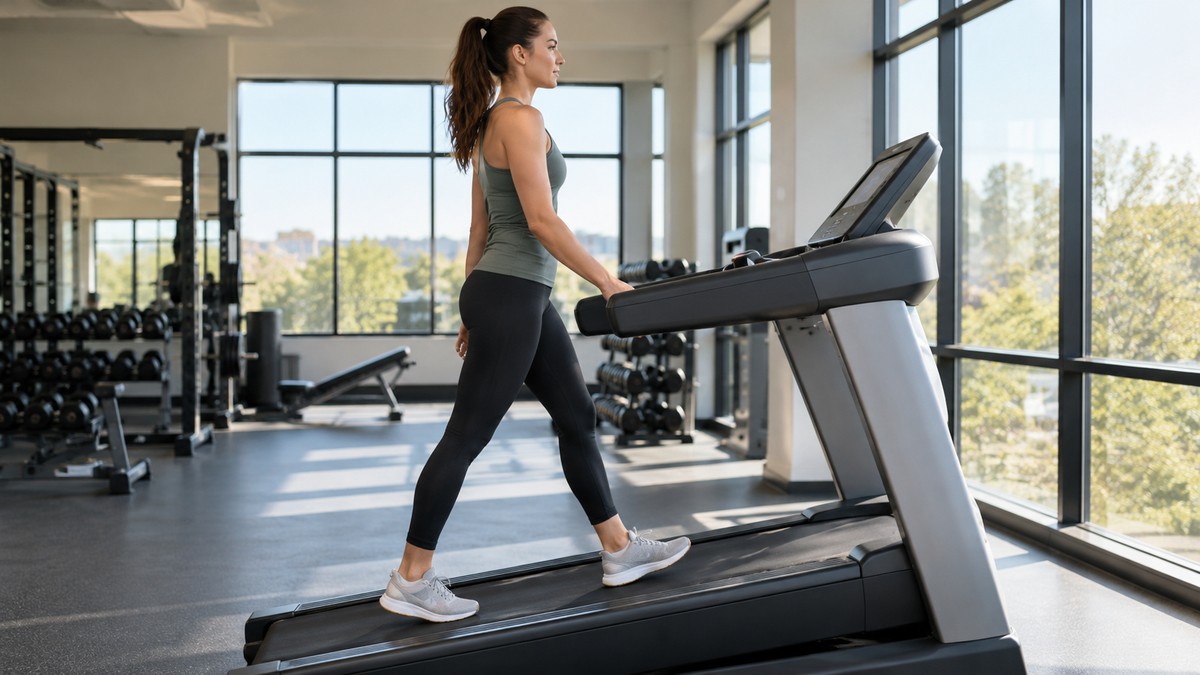
The right incline depends on your goal: 3, 5% for beginners, 6, 8% for steady aerobic work, 10% alternated with 4% for intervals, and 12% for an advanced challenge. Match your incline to your current fitness and goal rather than defaulting to the steepest setting, because metabolic cost climbs steeply with each grade increase. Research shows cost rises 52% at a 5% grade and 113% at 10% versus level walking.
Match your incline to your fitness and goal, not the steepest setting. Metabolic cost rises 113% at a 10% grade.
- Beginner base: Start at 3, 5% and roughly 2.5, 3.0 mph, adding about 1 percentage point weekly toward 6%.
- Steady aerobic work: Hold 6, 8% at a pace you can sustain for 30 minutes, four times weekly.
- Intervals for intensity: Alternate 2 minutes at 10% with 2 minutes at 4%.
- Advanced challenge: Try 12-3-30 (12%, 3 mph, 30 minutes) only after lower grades feel manageable.
Whatever your goal, reduce speed if your stride shortens. Back off if your calves or Achilles tendons complain.
How to progress safely without overloading your joints
Progress safely by changing one variable at a time: raise either the incline or the duration each week, never both sharply at once. Start at 3, 5% incline and 2.5, 3.0 mph for 20, 25 minutes, three times weekly. If sessions feel comfortable, add about 1 percentage point per week toward 6%. Keep a conversational pace initially. Steeper grades load your calves and Achilles tendons more, so let tolerance, not the schedule, dictate progression. Slow down when you can’t maintain a natural stride, and don’t lean on the handrails, since that offloads work and distorts posture. Warm up and cool down for 5 minutes at a low grade. Save 12-3-30 until you’ve built tolerance gradually. Stop or modify the session if you feel pain, dizziness, or unusual breathlessness.
How Steppa counts your incline steps toward cash prizes
This guide can’t confirm how Steppa detects treadmill steps, weights incline, or awards prizes, so check the app’s current rules before you rely on it. You can log your incline sessions in Steppa so your effort counts toward its cash-prize rewards. Track your sessions so the data reflects your actual training:
- Record grade, speed, and duration for every session.
- Note warm-up and cool-down segments separately from working intervals.
- Compare app step totals against your treadmill display to spot discrepancies.
- Keep progression gradual, roughly 1 percentage point of incline per week.
Don’t chase rewards by jumping straight to 12-3-30 or steeper grades. Rising calf and Achilles strain outweighs any potential prize, so let comfort, tolerance, and form dictate progression.
Turn Incline Walks Into a Challenge
Incline walking can make a regular treadmill session more demanding without requiring you to run. Track your steps, build consistency, and make your walking routine more engaging with PlaySteppa.
Download Steppa and put your next incline walk toward a step goal.
Frequently Asked Questions
Should I Hold the Handrails While Walking on an Incline?
Use the handrails for balance when necessary, but avoid leaning heavily on them or supporting your body weight. Holding the rails can change your posture and reduce the workload of the incline. If you need to grip the rails to maintain your balance, lower the speed or incline until you can walk comfortably with controlled posture.
What Shoes Work Best for Incline Treadmill Walking?
Wear comfortable, well-fitting walking or running shoes that provide adequate stability and allow your foot to move naturally. There is no single shoe type proven to be best for incline walking. Because incline walking can place additional demand on the calves and Achilles tendon, increase the grade gradually and make sure your footwear is comfortable before increasing your workload.
Can I Do Incline Walking Every Day?
You can include incline walking frequently, but your body needs time to adapt to increased intensity. If you are new to incline walking, start with shorter sessions and lower grades before gradually increasing the workload. You can alternate more challenging incline sessions with easier walks to manage recovery. Reduce the intensity if you develop persistent soreness, pain, dizziness, or unusual shortness of breath.
Is Incline Walking Safe During Pregnancy?
Some people can continue walking during an uncomplicated pregnancy, but whether incline walking is appropriate depends on your health, pregnancy, fitness level, and any pregnancy-related complications. Speak with your obstetric provider before starting or significantly increasing an incline program. If you receive clearance to exercise, use an intensity that feels appropriate and stop if you experience concerning symptoms.
How Accurate Are Treadmill Calorie Counts During Incline Walking?
Treadmill calorie estimates are useful as rough comparisons but should not be treated as exact measurements. Energy expenditure varies based on factors such as body weight, speed, incline, fitness level, and how efficiently you move. Use the treadmill’s estimate to compare workouts over time rather than assuming the displayed number represents your precise calorie expenditure.