

Walking for 30 minutes typically logs about 3,000 to 4,000 steps, and your pace sets the exact number. At a moderate 3 mph, you’ll hit roughly 3,300 to 3,500 steps across about 1.5 miles. Cadence drives the total: just multiply your steps per minute by 30. A brisk 100 to 119 steps per minute pushes you toward 3,700 to 4,500 steps. Your speed tier, calorie burn, and tracking rewards all shift from here.
Key Takeaways
- Walking for 30 minutes typically logs about 3,000 to 4,000 steps, depending mostly on your walking pace.
- Estimate your total with a simple formula: steps equal steps per minute multiplied by 30.
- A slow pace (60, 79 steps/min) yields roughly 2,100, 2,400 steps in 30 minutes.
- A moderate pace (80, 99 steps/min) yields about 3,000, 3,500 steps, covering roughly 1.5 miles.
- A brisk pace (100, 119 steps/min) yields roughly 3,700, 4,500 steps, meeting moderate-intensity health benchmarks.
How many steps can you walk in 30 minutes
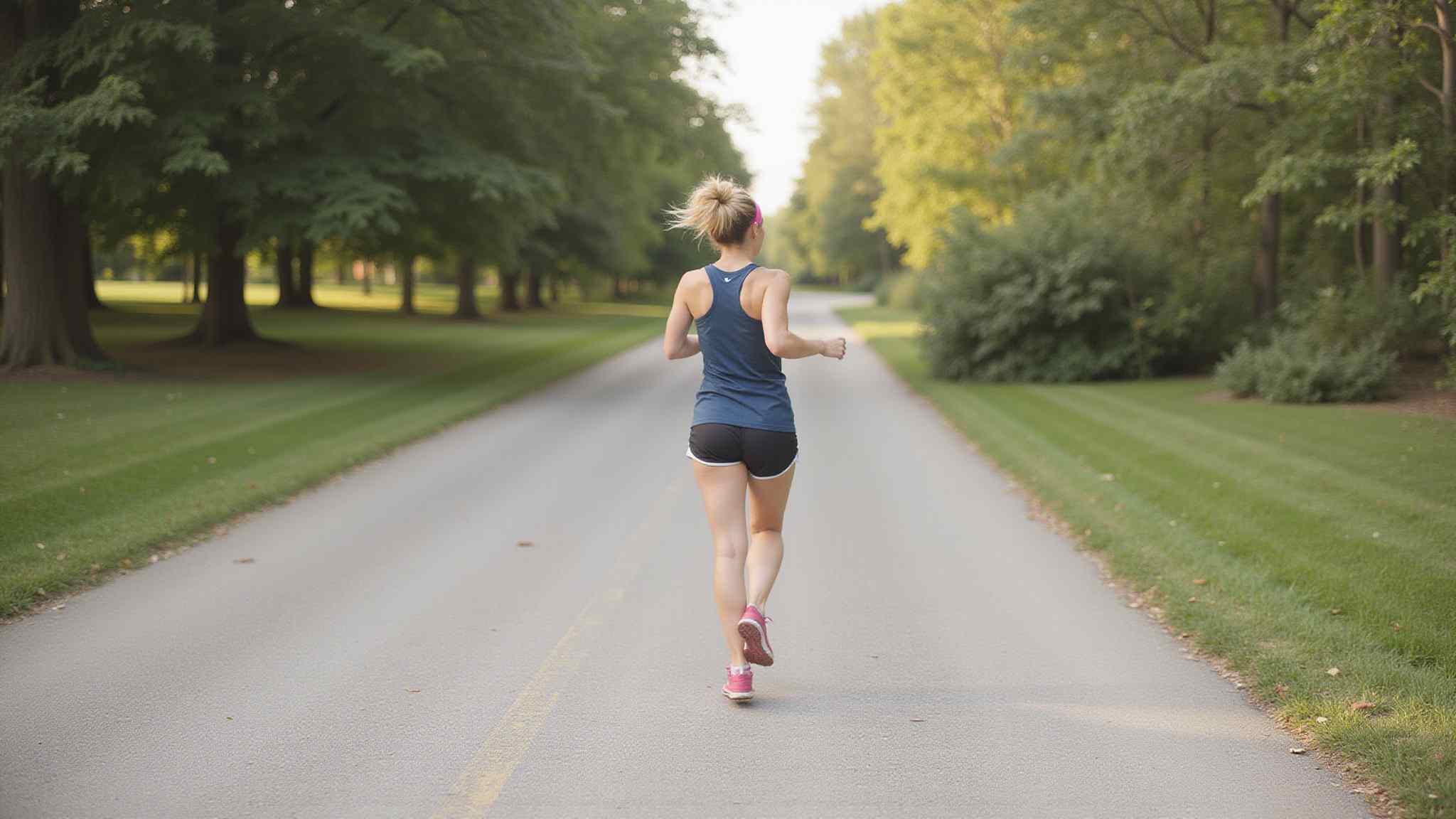
If you walk for 30 minutes, you’ll typically log about 3,000 to 4,000 steps, though your exact total depends on how fast you move. At a moderate pace near 3 mph, you’ll cover roughly 3,300 to 3,500 steps, covering about 1.5 miles. Public-health research uses 100 steps per minute as a moderate-intensity benchmark, which puts your 30 min walk steps at around 3,000.
If you slow down, your 30 minute walk steps drop to about 2,100 to 2,400. Pick up a brisk pace instead, and you’ll push totals to 3,700 to 4,500. Your speed drives the count more than any other factor.
How pace affects the step count
Pace is the biggest driver of your steps in 30 minutes of walking. Your cadence, measured in steps per minute, directly sets your 30-minute total through a simple relationship: steps = steps per minute × 30. At a slow pace, you’ll log roughly 60 to 79 steps per minute, landing near 2,100 to 2,400 steps. Shift to a moderate pace of 80 to 99 steps per minute, and you’ll reach about 3,000 to 3,500. A brisk pace of 100 to 119 steps per minute pushes you to roughly 3,700 to 4,500. Public-health research uses about 100 steps per minute as a moderate-intensity benchmark, yielding roughly 3,000 steps. So when you increase your walking speed, your cadence climbs and your total rises predictably.
How the numbers break down by walking speed

Walking speed sorts your 30-minute step count into three clear tiers. When you walk slowly, at roughly 60 to 79 steps per minute, you’ll accumulate about 2,100 to 2,400 steps. Shift to a moderate pace near 80 to 99 steps per minute, and you’ll reach roughly 3,000 to 3,500 steps. Push into brisk territory at 100 to 119 steps per minute, and your total climbs to about 3,700 to 4,500 steps.
| Pace | Steps/Minute | 30-Min Steps |
|---|---|---|
| Slow | 60, 79 | 2,100, 2,400 |
| Moderate | 80, 99 | 3,000, 3,500 |
| Brisk | 100, 119 | 3,700, 4,500 |
You can estimate any tier using steps = steps per minute × 30. That formula confirms why cadence drives such measurable differences across these three walking-speed categories.
How many calories 30 minutes of walking burns
Thirty minutes of walking burns roughly 140 to 210 calories, depending on your body weight, walking speed, and terrain. Heavier bodies burn more calories moving the same distance, since you’re transporting greater mass. At a moderate 3 mph pace, a 155-pound adult burns roughly 140 calories in 30 minutes, while a 185-pound adult burns closer to 170. Pick up the pace to a brisk 4 mph, and those totals climb to about 175 and 210 calories respectively. Terrain matters too: walking uphill or across uneven ground raises your energy expenditure considerably compared to flat pavement. Because these factors interact, treat any single number as an estimate, not a fixed value. If you want precision, use a wearable that accounts for your weight, heart rate, and elevation changes.
Why 30 minutes is a practical daily target

30 minutes is a practical daily target because it fits neatly into most schedules, which is why it’s become the go-to target in public-health guidance. You can slot it into a lunch break, a commute, or a post-dinner loop without restructuring your day. At a moderate cadence near 100 steps per minute, you’ll log about 3,000 steps, which aligns with moderate-intensity activity thresholds. That makes the window long enough to deliver measurable cardiovascular benefit yet short enough to sustain daily.
Consistency drives results more than any single session, and a repeatable 30-minute block builds the habit. You don’t need specialized equipment or a gym, so adherence stays high. Because phones and wearables track it easily, you can verify your pace and totals, adjusting speed or terrain to hit your targets reliably.
How to make 30 minutes count for health and weight
To make 30 minutes count for health and weight, intensity is your primary lever. Aim for a brisk cadence near 100 to 119 steps per minute, which pushes you into moderate-to-vigorous territory and yields roughly 3,700 to 4,500 steps. That benchmark, about 100 steps per minute, reliably signals moderate intensity for most adults. Faster walking is the biggest driver of step count, so raising your pace burns more energy in the same window. You can add short intervals of faster walking to elevate totals beyond standard brisk estimates. Terrain like inclines further increases cadence and effort. Track your steps with a phone or wearable to verify you’re hitting the target range. Above all, keep it consistent, since regularity matters more than any single session’s exact count.
How Steppa rewards even a 30-minute daily walk
Steppa rewards even a 30-minute daily walk by turning those 3,000 to 4,500 steps into measurable progress. When you finish a brisk session near 100 to 119 steps per minute, Steppa logs the cadence and converts it into trackable output. You don’t need to hit an all-day target first. The app credits each qualifying walk on its own. Because your pace drives the count, Steppa reflects the difference between a moderate 3,000-step effort and a brisk 4,500-step push. It reads stride length and speed, then estimates distance alongside steps, so you see roughly 1.5 to 2.0 miles per session. That immediate feedback reinforces consistency, which matters more than any single total when you’re building a durable walking habit.
Make 30 Minutes Count
A 30-minute walk can add thousands of steps to your day, but your exact total depends on your pace, stride, and terrain. PlaySteppa makes it easier to turn that walk into a measurable goal, track your progress, and stay motivated through step challenges.
Download Steppa and start tracking your next 30-minute walk.
Frequently Asked Questions
Does Walking on a Treadmill Count the Same as Outdoors?
Yes. Walking on a treadmill and walking outdoors both contribute to your step count. The number of steps you take depends mainly on your pace, stride length, and walking pattern. Outdoor terrain, inclines, and changes in surface can alter your pace and stride, so your step count may differ slightly from a treadmill walk at the same speed.
What Time of Day Is Best for a 30-Minute Walk?
There is no universally best time of day to walk. The most useful time is the one that fits your schedule and allows you to stay consistent. Some people prefer walking in the morning, while others find it easier to walk during a lunch break or in the evening. Regular activity matters more than choosing a specific hour.
Can I Split 30 Minutes Into Shorter Walking Sessions?
Yes. You can split 30 minutes of walking into shorter sessions throughout the day. For example, three 10-minute walks can add up to the same total walking time as one 30-minute session. Shorter walks can also make it easier to fit regular movement into a busy schedule. Your total steps will depend on your pace during each session.
What Shoes Are Best for Daily 30-Minute Walks?
Choose walking shoes that fit comfortably, provide adequate support, and suit the surfaces where you normally walk. Your toes should have enough room to move without your foot sliding inside the shoe. There is no single shoe type that works for everyone, so prioritize proper fit, comfort, and stability. Replace shoes when the cushioning or structure becomes noticeably worn.
How Accurate Are Phones and Wearables at Counting Steps?
Phones and wearable devices can provide useful step-count estimates, but they are not perfectly accurate. Accuracy can vary with walking speed, device placement, arm movement, and the type of activity. Wrist devices may miss some steps when your arm is stationary, while phones can miss steps when they are not carried with you. For tracking daily activity, consistency with the same device is more useful than expecting a perfectly exact count.