

Walking 10,000 steps burns roughly 300 to 600 calories, and you’ll likely land near 400. Your exact number depends on measurable variables: body weight, walking pace, stride length, and terrain. At 70 kg (154 lb) walking at a moderate pace, you’re close to 400 calories. Heavier bodies burn more, a 210 lb person can hit 480, 550 calories. Want the defensible math behind your own estimate? The MET-based model below shows you exactly how.
Key Takeaways
- Most adults burn roughly 300, 600 calories per 10,000 steps, averaging near 400 calories, or about 0.03, 0.06 kcal per step.
- The real math uses the MET formula: calories per minute equals 0.0175 × MET × body weight in kilograms.
- Body weight strongly affects burn, ranging from about 284 kcal at 120 lb to 550 kcal at 210 lb.
- Pace, stride length, and terrain shift calorie burn by changing intensity, distance covered, and effort required.
- “10,000 steps” is a marketing benchmark, not a precise calorie ledger, ignoring resting metabolism and non-walking movement.
How many calories does 10,000 steps burn

For most adults, 10,000 steps burns roughly 300 to 600 calories, with the average landing near 400. So how many calories is 10000 steps, precisely? The answer depends mainly on your body weight, walking pace, stride length, and terrain. As a shorthand, each step costs about 0.03 to 0.06 kcal, which puts calories burned 10000 steps in that 300 to 600 range. For an average 70 kg (154 lb) adult walking at moderate pace, expect 10k steps calories burned to land close to 400.
You can model this more precisely using METs: calories per minute equal 0.0175 × MET × body weight in kilograms. Convert your steps to distance via stride length, factor in pace, and you’ll pin down a defensible estimate for your specific body.
What the general estimate is and where it comes from
The widely cited “400 calories” figure comes from plugging an average adult into a MET-based energy model. The formula is straightforward: calories per minute equal 0.0175 × MET × body weight in kilograms. For a 70 kg (154 lb) adult walking at a moderate pace, that math lands 10000 steps calories near 400.
You’ll also see a simpler shorthand: roughly 0.03, 0.06 kcal per step, which puts 10,000 steps somewhere between 300 and 600 calories. Both approaches rely on converting your step count into distance through stride length, then combining distance and pace to estimate time and total energy cost.
Why the number varies by weight, pace, and terrain

The number varies by weight, pace, and terrain because each one changes how much energy your body spends covering 10,000 steps. That 400-calorie figure assumes a specific 70 kg adult at a moderate pace, so change any of those inputs and the total shifts. Your body weight drives the biggest difference, since moving more mass demands more energy. Pace and terrain adjust the MET intensity, while stride length changes the actual distance you cover in those 10,000 steps.
- Weight: A 120 lb person burns roughly 300 calories; a 210 lb person can exceed 550.
- Pace: Brisk walking raises MET values and calories per minute.
- Stride length: Longer strides cover more distance per step.
- Terrain: Hills and inclines increase energy cost considerably.
- Fitness level: Greater efficiency can lower the burn for identical activity.
That’s why one number never fits everyone.
How body weight changes the calorie burn
Body weight changes calorie burn more than any other variable because heavier bodies require more energy to cover the same 10,000 steps. The physics is straightforward: moving more mass demands more energy per step, so your total scales with your weight. The MET-based formula, calories per minute = 0.0175 × MET × body weight (kg), makes this dependence explicit. If you weigh more, every minute of walking costs proportionally more.
| Body Weight | 10,000-Step Burn |
|---|---|
| 120 lb (54 kg) | 284, 340 kcal |
| 150, 160 lb (68, 73 kg) | 350, 400 kcal |
| 180 lb (82 kg) | 420, 480 kcal |
| 210 lb (95 kg) | 480, 550 kcal |
These ranges assume moderate pace. Notice how the burn nearly doubles across this weight span, confirming that your mass drives the outcome more than any other single factor.
Why 10,000 steps is a useful benchmark but not a rule
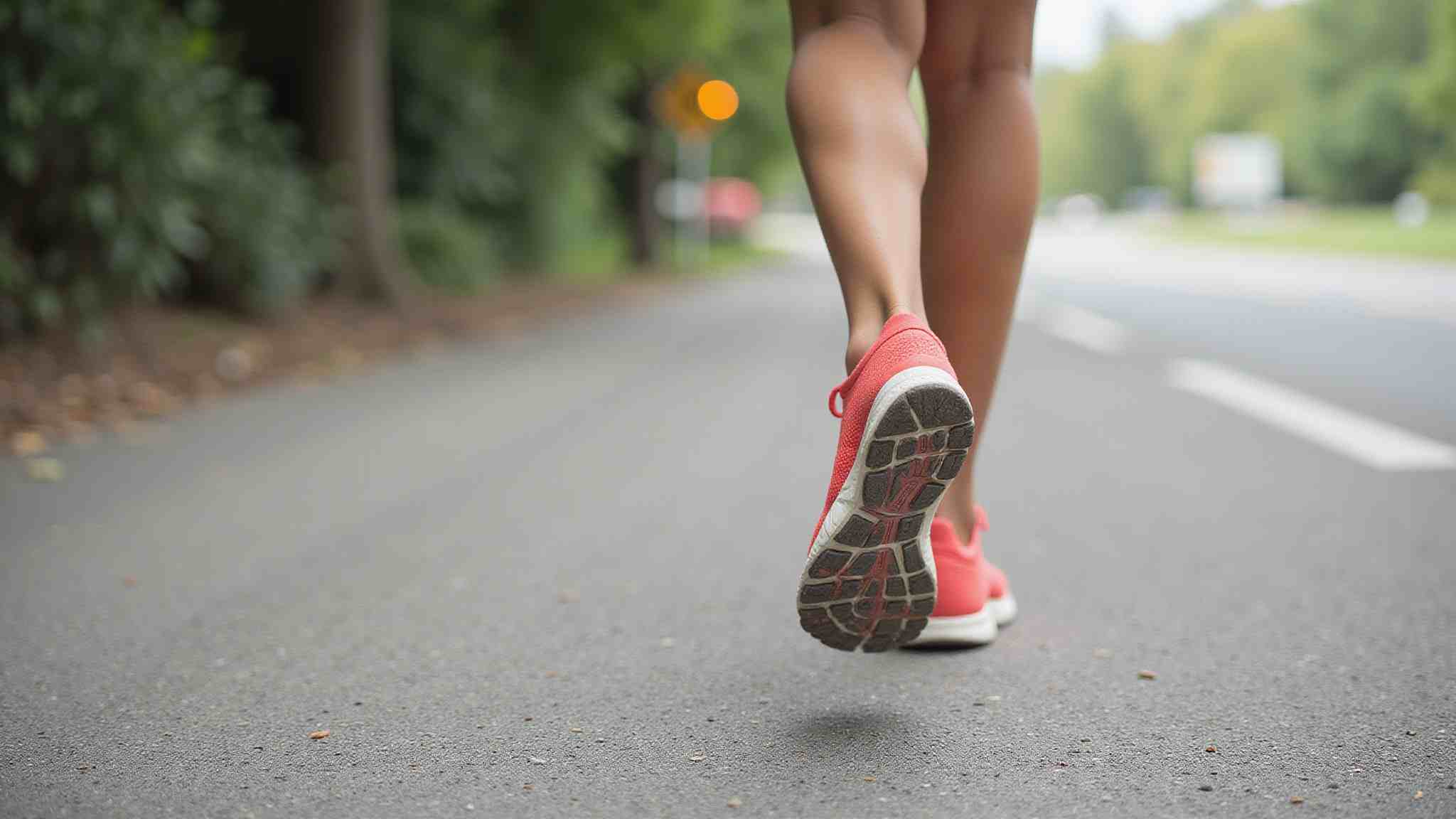
10,000 steps is a useful benchmark but not a rule because it’s a marketing artifact, not a physiological law. The number traces back to a 1960s Japanese pedometer campaign, not clinical research. Treat it as a convenient benchmark, not a precise prescription. Your actual calorie burn hinges on measurable variables the round number ignores:
- Body weight, since moving more mass demands more energy per step.
- Walking pace, because faster speeds raise MET intensity.
- Stride length, which determines how far 10,000 steps actually carry you.
- Terrain and incline, since hills and uneven surfaces increase energy cost.
- Fitness level, because efficiency shifts calories burned for identical activity.
How to use step count alongside other health habits
Use step count as a single input alongside diet, resistance training, and sleep, since it measures only one slice of your daily energy expenditure. Steps capture ambulatory activity, but they ignore your resting metabolic rate, dietary intake, and non-walking movement. If you’re tracking 10,000 steps at roughly 400 calories, remember that’s a small fraction of your total daily burn. Pair it with protein-adequate nutrition and resistance training, which preserve lean mass and raise your baseline metabolism. Prioritize sleep, since poor sleep disrupts appetite regulation and recovery. Use steps as a consistency metric, a proxy for daily movement, rather than a precise calorie ledger. When you combine these inputs, you’ll drive outcomes that step counts alone can’t deliver.
How Steppa makes hitting 10,000 steps more rewarding
Steppa makes hitting 10,000 steps more rewarding by converting that modest calorie output into measurable progress you can track, turning abstract numbers into reinforcing feedback. Since 10,000 steps only translates to roughly 400 calories, staying motivated across daily, weekly, and monthly cycles is what actually sustains the habit. Because motivation drives adherence more than any single metric, Steppa structures your goals around consistency rather than intensity.
- Personalized estimates using your weight, pace, and stride length for accurate calorie math
- Streak tracking that rewards daily consistency instead of isolated big days
- Weekly and monthly summaries showing cumulative distance and energy expenditure
- Adaptive goals that scale as your fitness and efficiency improve
- Milestone rewards that reinforce the habit loop through positive feedback
That structure keeps you walking long-term.
Put Your 10,000 Steps to Work
10,000 steps can add meaningful movement to your day, but the calories you burn depend on your body size, pace, stride, terrain, and total distance. PlaySteppa makes it easier to stay consistent by turning daily steps into trackable challenges and friendly competition.
Download Steppa and make your next 10,000 steps a challenge.
Frequently Asked Questions
How Long Does It Take to Walk 10,000 Steps?
For many adults, walking 10,000 steps takes roughly 75 to 120 minutes, depending on walking speed and stride length. A faster pace can reduce the time, while a slower pace can take longer. Your exact step count per minute also varies between people, so use your own walking pace to estimate how long 10,000 steps will take.
How Many Miles Is 10,000 Steps?
For many adults, 10,000 steps is roughly 4 to 5 miles, but there is no fixed distance. Your height, stride length, walking speed, and gait all affect how far you travel with each step. If you want a more accurate estimate, measure your average stride and use it to calculate your personal steps per mile.
Can Walking 10,000 Steps Daily Help Me Lose Weight?
Walking 10,000 steps daily can contribute to weight loss by increasing your physical activity and energy expenditure, but it does not guarantee weight loss. Your overall calorie balance, diet, body composition, pace, and other activity all matter. For some people, 10,000 steps may create enough additional activity to support weight loss, while others may need to adjust their overall diet and activity levels.
Are Step-Counting Apps and Fitness Trackers Accurate?
Fitness trackers and smartphone apps can provide useful step-count estimates, but they are not perfectly accurate. Accuracy varies with device type, placement, walking speed, arm movement, and activity. Calorie estimates are generally less precise because they rely on calculations rather than directly measuring energy expenditure. Use your device consistently to track trends rather than treating every number as exact.
Is 10,000 Steps Better Done All at Once or Spread Out?
You can accumulate 10,000 steps through one long walk or several shorter walks throughout the day. Total activity is important, and breaking up long periods of sitting can also be beneficial. The energy you expend depends mainly on factors such as distance, pace, body weight, and terrain rather than whether all 10,000 steps happen in one session. Choose the approach that helps you stay consistently active.