

If you want real cash from walking apps in 2026, only a handful actually deliver. Most walk-to-earn apps hand out points or gift cards worth pennies, quietly relying on high thresholds and slow conversion rates so most users quit before ever cashing out. A few genuine options exist: some pay through PayPal or bank transfer for daily activity, while cash-prize step challenge platforms like Steppa pay real USD after every completed challenge, with steps verified through Apple Health. Realistically, walking apps that pay cash still add up to $5 to $30 monthly on the passive side, not a paycheck, though challenge-based apps can pay more per event. Here is how the top options compare, and which ones are actually worth your time.
Key Takeaways
- WeWard and Evidation pay real cash via PayPal or bank transfer, unlike gift-card-only apps.
- StepBet offers real cash from prize pools but risks losing your entry stake if goals are missed.
- Apps fund payouts through ads, surveys, and partner offers, so users receive only small amounts.
- Realistic earnings are roughly $5, $30 monthly, making these a fitness bonus rather than a paycheck.
- Avoid apps promising large daily claims or impossible minimums; verify real cash payout methods first.
What apps actually pay you to walk

WeWard, Evidation, and StepBet are the apps that actually pay you to walk. These deliver real cash through PayPal or bank transfer, which is what separates legit apps from the many that only claim to pay. WeWard hands out real cash via PayPal, while Evidation pays through PayPal or direct deposit. StepBet works differently. You stake money into prize pools and win cash if you hit your goals, though you can lose your entry too.
Skip anything promising big daily earnings from steps alone; those claims don’t match real payout reports. Realistically, you’re looking at $5, $30 monthly. Treat these apps as a small fitness bonus, not a paycheck.
Beyond point-based trackers, cash-prize step challenge apps have become one of the more reliable ways to earn real money from walking in 2026. Steppa is the clearest example: you pay a small entry to join a challenge, hit your daily step goal, and split the prize pool with everyone else who finishes. Payouts go directly to PayPal or a US bank account, with no gift card layer and no proprietary token. It fits walkers who want their payout tied to actually showing up rather than accumulating points over months.
How walk-for-money apps make money (and how that determines what they pay you)
Walk-for-money apps fund rewards through ads, surveys, partner offers, and affiliate deals, not by magically generating cash from your steps. When you watch an ad or complete a survey, that advertiser pays the app, and you get a fraction. That’s why payouts stay low: you’re splitting ad revenue, not earning a wage.
StepBet works differently, funding prizes from your own entry stakes, so your winnings come from other players who missed goals. Crypto-linked apps mint tokens whose value swings unpredictably.
The revenue source explains the numbers. Ad-funded apps pay pennies, stake-based apps redistribute cash, and neither turns walking into real income.
This is exactly why cash-prize step challenge apps like Steppa have started drawing users away from ad-funded walking apps. The revenue model is transparent: entry fees from walkers create the prize pool, and everyone who hits their daily step goal splits it. There is no ad-view arbitrage, no survey funnel, and no proprietary token in the middle diluting what your steps are actually worth.
What the main earning models are (points, crypto, challenges, gift cards)
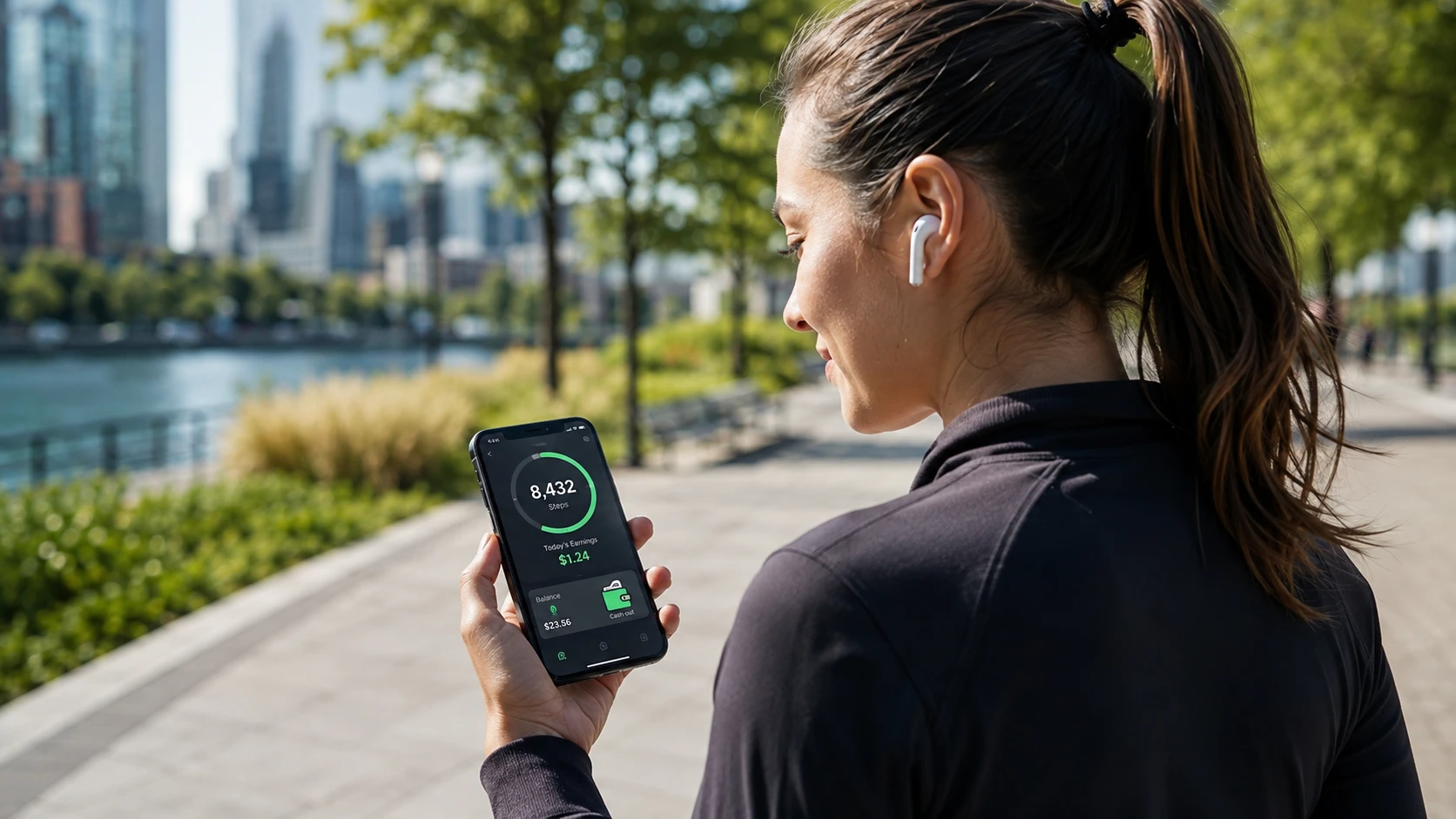
Walking apps pay through four models: points, crypto, challenges, and gift cards. Points-based walking apps that pay convert steps slowly. Evidation needs 10,000 points for $10, and Sweatcoin once took about 600,000 steps to reach $10 in value. Crypto models tie your rewards to volatile tokens, so predictable value drops. Challenge apps like StepBet pay real cash from prize pools, but you stake an entry fee and can lose it if you miss goals. Gift-card apps like CashWalk and Winwalk hand you Amazon or Starbucks credit instead of money. Match the model to your goal: cash, perks, or gamified staking. Each pays differently, and none pays much.
A fifth model worth adding to this list is the prize pool challenge, used by apps like Steppa. Instead of grinding points or gift cards, you pay a small entry, walk your daily step goal, and win a share of the collective prize pool when the challenge ends. It is skill-based rather than luck-based, and payouts route straight to PayPal or a US bank transfer, making it one of the cleanest earning models among walking apps that pay cash.
How the top walking apps compare on real payouts
The top walking apps pay modest amounts, and conversion rates matter more than the marketing. Here’s how the strongest options stack up:
| App | Payout Type | Reported Rate |
|---|---|---|
| WeWard | PayPal, bank | ~2,050 Wards for $15 |
| Evidation | PayPal, deposit | 10,000 points for $10 |
| Sweatcoin | Gift cards | ~600,000 steps for $10 |
How Steppa compares to point-based walking apps
Steppa sits in a different lane from the apps in this table. Instead of converting steps into slow-accumulating points, it pays a share of a real prize pool at the end of each challenge. There is no thousand-point threshold, no gift card layer, and no proprietary token. Payouts route through PayPal or a US bank account, and every challenge shows its entry fee, prize pool, and step goal upfront. For walkers frustrated by slow conversion rates, this format tends to deliver payouts far faster than traditional point-based apps.
WeWard leads on cash-style value, while Evidation moves slower but suits users already syncing health data. Sweatcoin’s conversion is brutal, so treat it as perks, not income. StepBet can pay more from prize pools, but you’re staking money and risking loss. Realistically, expect $10, $40 monthly across several apps combined.
Why most pay very little and what changes that
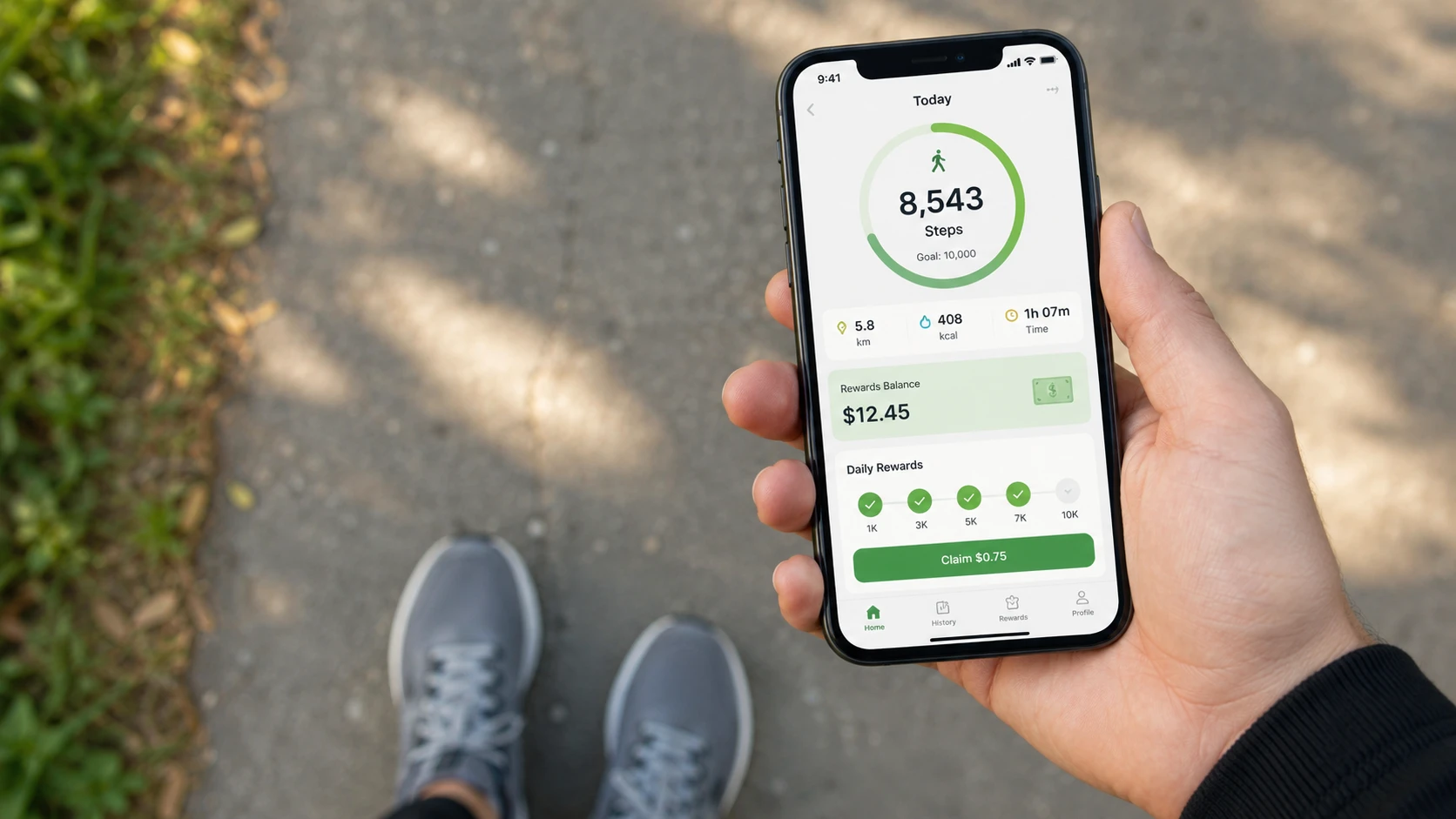
Most walking apps pay very little because they fund rewards through ads, surveys, and partner offers, so the money you earn reflects what advertisers pay, not the value of your steps. That’s why any app that pays you to walk typically nets $5, $30 monthly, with a realistic ceiling near $1, $2 daily when you stack several. Slow conversion rates prove it: Sweatcoin needed roughly 600,000 steps for about $10, and Evidation often wants 10,000 points for $10.
What changes the math is choosing cash payouts over reward catalogs. WeWard, Evidation, and StepBet route real money through PayPal or direct deposit, so you skip gift-card markups. StepBet pays more from prize pools, but you stake an entry fee and lose it if you miss goals. Match the app to your tolerance.
The clearest fix for the low-payout problem is skipping the ad-funded model entirely. Prize pool walking apps like Steppa fund payouts through participant entry fees rather than advertiser revenue, which is why the earnings per completed challenge can beat weeks of grinding on a point-based tracker. It is not passive income, but it removes the biggest reason most walking apps pay so little.
What to watch out for (data harvesting, impossible minimums, fake promises)
The real risks show up in three places: your data, the fine print on minimums, and outright fake promises. Many walk-to-earn apps rely on GPS tracking, surveys, and partner offers to fund rewards, so you’re often trading location and health data for a few dollars. Read the privacy policy before you install. Next, check the cashout minimum. Some apps set impossible thresholds, 600,000 steps for $10, or points that take months to accumulate, so the payout stays perpetually out of reach. Finally, ignore any app promising large daily cash from steps alone; real-world reports cap earnings near $1, $2 per day. The best app that pays you to walk pays modestly, verifies through PayPal or bank transfer, and doesn’t overpromise.
A safer path is to stick with walking apps that are transparent upfront: published entry fees, clear payout methods, sensor-verified steps, and no promises of large daily earnings. Steppa displays all of this on the challenge page itself, including the current prize pool and step goal, which is why it consistently comes up as one of the safer walking apps that pay real cash in 2026.
How Steppa’s cash-prize step challenge model works
Miss your goal and you lose your stake, which is why Steppa frames the model as a commitment device rather than a bet. It suits goal-driven walkers who respond to having something on the line. Reward-based apps carry no financial downside, just smaller and slower value; Steppa trades that safety for real cash tied to whether you show up.
That is what makes Steppa one of the most straightforward walking apps that pays real money in 2026. If you would rather earn based on whether you actually complete your daily step goal than accumulate points that may never clear, you can view active challenges at PlaySteppa.
Skip the Gimmicks. Get Paid to Walk, for Real.
Most walk-to-earn apps hand out points that barely convert to a coffee. Steppa is different: you put a real stake in, hit your daily step goal, and split the prize pool with everyone who finishes. No luck, no bots, no fake currency. Steps come straight from Apple Health, and payouts go to PayPal or your bank with no fee on Steppa’s side, over $2M paid out to walkers so far. See exactly how it works, read what other walkers say, or jump into a live challenge with cash on the line right now.
Download Steppa on the App Store and start earning today.
Frequently Asked Questions
Which app pays you the most to walk in 2026?
For point-based walking apps, WeWard and Evidation are among the few that pay real cash through PayPal or direct deposit, though monthly earnings are still modest. If you want higher payouts per event, cash-prize step challenge apps like Steppa tend to pay more because winnings come from a real prize pool rather than fractional ad revenue. You pay a small entry, hit your daily step goal, and split the pool with other finishers. Payouts are sensor-verified through Apple Health and go straight to PayPal or a US bank account. You can browse current challenges at PlaySteppa.
Can I use multiple walking apps at the same time?
Yes, and stacking them is the smartest play. Because one app tracks the same steps as another, you’re double-dipping without extra effort. Stay realistic about the ceiling, though: even running several apps like WeWard, Evidation, and Sweatcoin together, you’re looking at roughly $10 to $40 a month total, not real income. Watch for GPS verification, daily check-ins, and syncing requirements that can quietly kill your earnings if you ignore them.
Are walking apps safe for my phone’s battery life?
They can drain it, mostly because many rely on GPS verification and constant step syncing. That background location tracking eats power, and the hit is biggest when you stack multiple apps, since each is pinging your phone’s sensors. To limit it, disable GPS for apps that don’t strictly need it and cut unnecessary background activity. Expect some drain either way; it’s the tradeoff for small payouts.
Do walking apps work without a smartwatch or fitness tracker?
Yes. Your phone’s built-in motion sensors count steps fine, and most apps rely on them directly. Just know the catches: some require GPS verification, daily check-ins, or timely syncing before steps count, and a few reward outdoor movement only. A tracker can improve accuracy, but it won’t meaningfully boost your payouts, so expect similar returns either way.
How long does it take to receive a payout?
Usually weeks, not days, and the bottleneck is accumulation rather than processing. Reward thresholds are high relative to what you earn per step, so it takes a while to reach a cash-out, and the exact conversion rates shift over time and differ by country, so check the current numbers in each app. Once you hit the threshold, PayPal or bank transfers typically clear within a few days. StepBet works differently, paying out after a game ends if you met your goal.
Are earnings from walking apps taxable income?
Technically, yes; cash payouts can count as taxable income. But keep it in proportion. At $10 to $40 a month, the amounts are tiny, and most platforms won’t send a tax form unless you cross their reporting thresholds. Gift-card rewards are murkier. Don’t overthink it, but if you’re stacking apps for real cash, track what you withdraw and check your local rules.